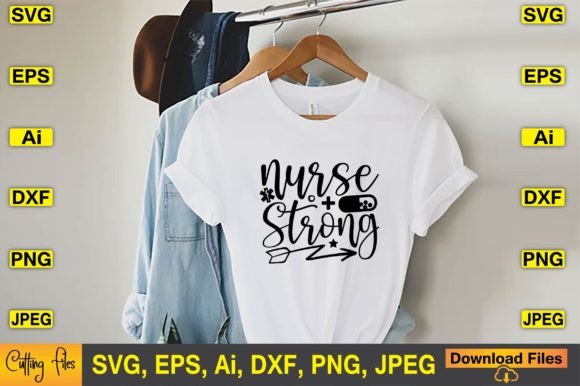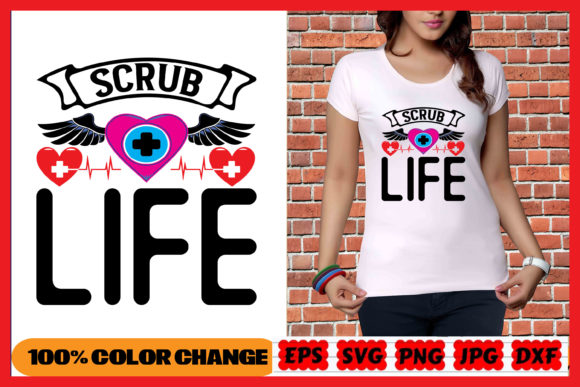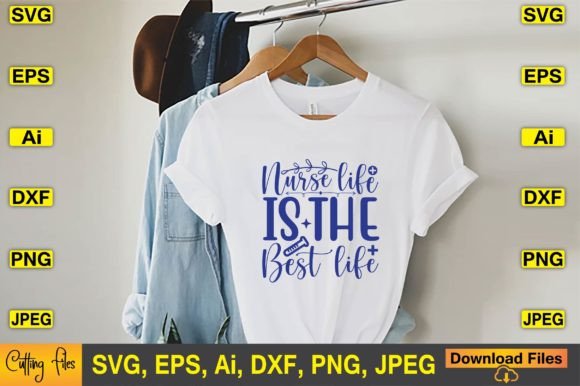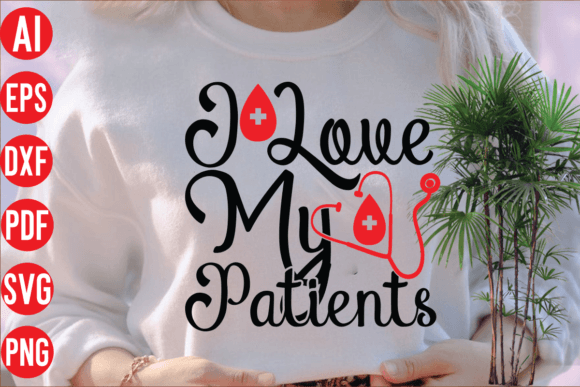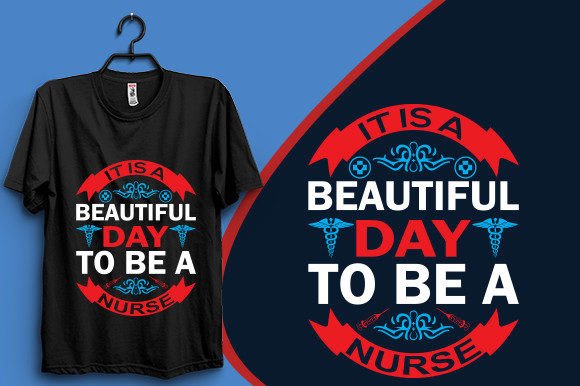
Reviewing the Trendy Nurse T-shirt Design for Real Embroidery
As a designer who has spent years digitizing patterns and testing them on everything from crisp cotton to stretchy performance blends, I approach every new Trendy Nurse T-shirt Design with a critical eye. It is not enough for a graphic to look good on a screen; it must survive the needle, the hoop, and the wash cycle. When I first opened this file, my immediate thought was about versatility. The 15-inch by 18-inch dimensions suggest a bold statement piece, likely intended for full-front prints or large back designs on adult apparel. However, for those of us in the embroidery world, scaling down is where the true test begins.
First Impressions and Visual Personality
The mood of this design is professional yet approachable, striking a balance that is essential for medical-themed merchandise. Nurses often seek apparel that reflects their pride without being overly clinical or sterile. This design achieves that through its layout and visual personality. The lines appear clean, which is crucial when converting a vector-based SVG into a stitch file. In embroidery, complex gradients and tiny details can get lost, so a design with strong, defined shapes is always preferable.
When I visualize this as an embroidery project, I see it working best as a focal point. Whether it is centered on a chest pocket or spanning across the shoulders of a scrub top, the clarity of the design ensures it remains legible. For Etsy sellers and craft business owners, this visual clarity translates directly to customer trust. A muddy or unclear design suggests low quality, whereas crisp lines imply professionalism and care.
Real-World Application: The Custom Tote Scenario
To truly evaluate this asset, I imagined a specific real-life scenario: creating a set of personalized gifts for a nursing graduation party. I decided to use the design on heavy-duty canvas tote bag design prototypes. Canvas is unforgiving; it shows every gap in stitching and every pull in the thread. Here, the Trendy Nurse T-shirt Design proved its worth. Because the original file is provided in multiple formats including AI, EPS, and SVG, I was able to isolate specific elements to create a simplified version suitable for embroidery.
I focused on the central motif, ignoring the finer background details that might cause registration issues on textured fabric. The result was a sturdy, high-impact handmade product that felt substantial. The design did not look like an afterthought; it looked intentional. This is key for small shop product lines. Customers paying for custom work expect the design to integrate seamlessly with the material, not just sit on top of it.
Navigating Fabric and Hoop Constraints
While the 15x18 inch size is impressive for printing, embroidery requires careful scaling. If you are working with a standard 5x7 or 6x10 hoop size, you must reduce the design significantly. This is where you need to be cautious. Reducing a large graphic can lead to excessive stitch density if not managed properly. Dense areas can cause puckering, especially on lighter fabrics like poly-cotton blends commonly used in scrubs.
I recommend using a cut-away stabilizer for any garment that will undergo frequent washing, such as nurse uniforms or daily-wear sweatshirt embroidery. For delicate items like baby embroidery projects or thin kitchen towels, a tear-away stabilizer might suffice, but only if you simplify the design further. Avoid using this full-scale graphic on curved surfaces like caps unless you break it into smaller, manageable sections. The tension on a cap hoop can distort large, continuous fill areas, leading to gaps or thread breaks.
Thread Color and Contrast Considerations
One practical note for machine embroidery design users is thread selection. Since this is a nurse-themed graphic, traditional whites, blues, and reds come to mind. However, do not assume white thread on white fabric will work. Without sufficient contrast, the satin stitch borders and fill stitch interiors will vanish. I strongly advise testing your digitized version in black and white mockups first. If the design loses its shape in grayscale, it will likely lack definition when stitched. Choose thread colors that pop against the fabric texture of your chosen garment.
Commercial Viability and Licensing
For digital embroidery file sellers and commercial embroidery practitioners, understanding the license is paramount. The product description states you receive AI, EPS, SVG, DXF, PNG, and JPG formats. It explicitly mentions use for T-shirts, mugs, and bags. However, it does not explicitly state "commercial embroidery rights" for the stitched physical item. As a responsible creative entrepreneur, you must verify this before selling finished goods. If the license allows for physical product sales, this design becomes a valuable asset for your design assets library.
Even if restricted to personal use, it serves as an excellent base for learning how to convert print-ready graphics into stitch-ready files. You can practice adjusting running stitch paths for outlines and optimizing underlay stitches to prevent shifting. This makes it a useful tool for hobbyists looking to upgrade their skills.
Final Verdict for Makers and Sellers
The Trendy Nurse T-shirt Design is a robust starting point for various T-Shirt Designs and Graphics projects. Its strength lies in its bold, clear composition, which translates well to embroidery when scaled appropriately. It is not a plug-and-play solution for every hoop size; it requires thoughtful digitization and testing. But for those willing to put in the prep work, it offers high visual appeal and strong marketability.
Before you commit to a large batch of custom apparel or personalized gift orders, always stitch out a test sample on scrap fabric. Check for thread breaks, tension issues, and overall clarity. If the test swatch looks clean, you are ready to produce a finished product that customers will value. Whether you are creating an embroidered patch for a uniform or a decorative pillow cover for a nurse’s lounge, this design holds up under scrutiny. Just remember: respect the scale, choose your stabilizer wisely, and let the quality of your stitching speak for itself.