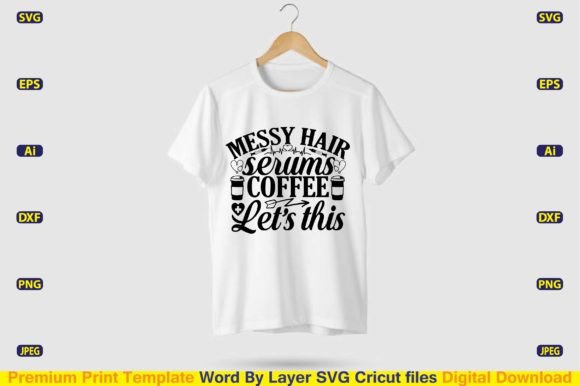
Reviewing the Messy Hair Serums Coffee Lets This SVG
As a designer who spends more time staring at stitch maps than actual fabric, I have learned to be skeptical of digital files that promise versatility but deliver frustration. When I first pulled up Messy Hair Serums Coffee Lets This SVG on my screen, my initial reaction was not just about the aesthetic appeal, though the theme is undeniably charming. It was about structure. For those of us running small embroidery businesses or creating custom apparel for clients, a pretty graphic is useless if it does not translate well into thread. This review breaks down how this specific design holds up when moved from the digital realm of Cricut and Silhouette cutting files into the tangible world of machine embroidery.
First Impressions and Visual Personality
The mood of this design is relaxed, relatable, and slightly humorous. It taps into the universal language of morning routines and self-care, making it an immediate candidate for personalized gifts and boutique merchandise. Visually, the layout balances text with iconography in a way that feels organic rather than rigid. For embroidery designers, this balance is critical. If the elements are too scattered, you risk long travel stitches that can snag or look messy on the back. If they are too cramped, the needle perforations can weaken the fabric.
Looking at the layers, which are essential for users working with word-by-layer SVG files, there is a clear hierarchy. This separation allows for creative freedom. You might choose to embroider the text in a solid fill stitch while keeping the graphical elements as a lighter running stitch or satin stitch accent. This adaptability is what separates a basic clip art file from a professional-grade design asset.
Real-World Application: The Tote Bag Test
To truly evaluate Messy Hair Serums Coffee Lets This SVG, I imagined a common scenario for many Etsy sellers: a custom order for a canvas tote bag. Canvas is a sturdy fabric, but it has a distinct texture that can interfere with fine details. In this context, the design performs admirably because its core elements are bold enough to stand out against the weave of the material.
If I were stitching this onto a tote, I would likely use a medium-weight cut-away stabilizer to prevent puckering, especially around the denser areas of the text. The result would be a durable, washable product that appeals to customers looking for functional yet stylish accessories. The theme fits perfectly with the "messy hair" vibe, suggesting a product that is meant to be used daily, not just displayed. This increases the perceived value of the finished product because it promises longevity alongside aesthetics.
Apparel and Fabric Considerations
When moving from tote bags to custom apparel, such as sweatshirts or t-shirts, the stakes change. Stretchy fabrics require careful attention to stitch density. If this design is intended for a fitted t-shirt, you must ensure that the fill stitches are not too dense, or the garment will pull and distort after washing. For a cozy sweatshirt, however, the design can handle more saturation. The contrast between the thread colors and the fabric becomes paramount here. A light thread on a dark heather grey sweatshirt can create a sophisticated look, while bright colors on white cotton offer a playful, energetic vibe.
For baby embroidery projects, such as onesies or bibs, simplicity is key. While this design is generally clean, you must check the smallest details. Tiny serifs or thin lines in the text may not survive the rigors of a baby’s daily life or frequent washing. In such cases, simplifying the color palette and ensuring robust underlay stitches is crucial for maintaining the integrity of the embroidered patch or direct stitch work.
Navigating Technical Challenges
No design is perfect for every situation. There are specific scenarios where you should approach Messy Hair Serums Coffee Lets This SVG with caution. Small hoop sizes, such as 4x4 inches, might constrain the layout if the design is large. Always check the dimensions before hooping. Additionally, curved surfaces like caps present a challenge. The distortion inherent in cap embroidery can warp text, so if you plan to use this on a hat, consider breaking the design into smaller, separate elements that can be positioned more flexibly.
Textured fabrics, like terry cloth towels or fluffy blankets, can swallow up fine details. If you are creating holiday embroidery for kitchen towels, you might need to increase the stitch width or add a backing layer to ensure the design remains visible. Dark fabrics also pose a challenge if the design relies on subtle shading. In these cases, using a high-contrast thread color is non-negotiable for visual clarity.
Commercial Viability and Brand Consistency
For craft business owners and small shop products, consistency is brand currency. This design fits well within a lifestyle brand that values authenticity and humor. It works seamlessly for printable mockups, allowing you to showcase the design on various products before committing to production. This saves time and resources, enabling you to test market response quickly.
However, before listing this as a commercial embroidery project, you must verify the licensing terms. Since the product description mentions it is a digital download including SVG files for cutting machines, it is vital to confirm whether the license extends to machine embroidery sales. Some creators allow personal use only, while others permit unlimited commercial sales of finished physical items. Never assume. Check the included documentation or contact the creator directly to protect your business from legal issues.
Practical Designer Notes
Before you run this design on your client’s expensive linen shirt, follow these steps:
- Test on scrap fabric: Always stitch out a sample on the same type of fabric you intend to use for the final product. This reveals any tension issues or registration errors.
- Check thread contrast: View the design in black and white on your screen. If the elements blend together without color, the design lacks sufficient structural separation.
- Review stitch density: Use your embroidery software to analyze the stitch count. High density may require heavier stabilizer or slower machine speeds.
- Inspect small details: Zoom in on the corners of letters and intricate parts of the graphics. Ensure they are not too small to be picked up by the needle.
- Confirm hoop size: Make sure your machine’s hoop can accommodate the full design without needing to re-hoop, which can cause alignment issues.
In conclusion, Messy Hair Serums Coffee Lets This SVG is a versatile asset for designers who understand the nuances of thread and fabric. It offers a blend of charm and practicality that, when executed with proper technique, results in high-quality handmade products. Whether you are creating a personalized gift, expanding your Etsy listings, or designing custom apparel, this graphic holds up well under the scrutiny of real-world application. Just remember that the digital file is only the starting point; your skill in stabilization, thread selection, and machine tuning determines the final success of the embroidered piece.